
与传统的壁挂式设备不同,堆叠式系统提供了前所未有的灵活性,允许房主根据需要定制并逐步扩展储能容量。本文将深入探讨堆叠式电池技术,详细分析其技术规格、安装优势、实际应用场景及未来发展潜力,篇幅约为1500字。
解析堆叠式储能系统的架构
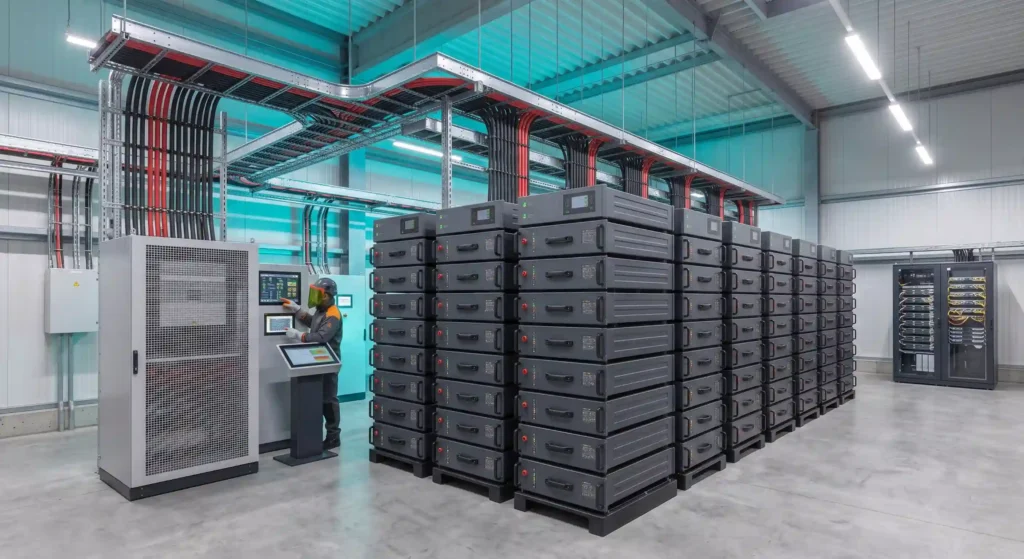
堆叠式电池系统本质上是模块化的。它围绕独立的、高能量密度的磷酸铁锂(LiFePO4)电池模块进行设计,这些模块垂直堆叠在底座上,通过集成的盲插连接器(blind-mate connectors)连接,并由高强度紧固件固定。
传统的“一体机”系统容量往往固定不变,而堆叠式架构则由不同的独立组件构成:
底座:一块加固板,用于支撑整个堆叠系统的重量,并提供关键的减震隔离功能。
电池模块:能量存储单元。典型模块容量在2.5 kWh至5.12 kWh之间。这些模块可通过并联或串联方式连接,从而灵活调整电压与容量。
控制模块/BMS:位于堆叠系统顶部,智能电池管理系统(BMS)负责控制充电过程、监测电芯健康状况、与混合动力逆变器通信以及执行安全管理协议。
这种配置将设计理念从单一、笨重的设备,转变为一种可扩展、可定制的“能源库”——用户既可以从小规模配置起步,也能随着家庭能源需求的增长而逐步扩容。
技术性能与安全标准(Technical Performance and Safety Standards)
选择堆叠式储能电池系统(Stacked Battery System)时,需要充分了解决定其运行效率、使用寿命及安全性能的关键技术参数。这些参数能够确保您的投资获得可靠、稳定的全年电力供应。
| 技术参数 | 高端系统典型标准 | 重要性及实际意义 |
|---|---|---|
| 电芯化学体系(Cell Chemistry) | 磷酸铁锂(LiFePO4/LFP) | 与三元锂(NMC)电池相比,具有更出色的热稳定性、安全性和循环寿命,起火风险相对较低。 |
| 标称电压(Nominal Voltage) | 48V(低压)或200V以上(高压) | 需要与混合逆变器的输入电压相匹配。高压堆叠式系统通常在大功率负载应用中具有更高的运行效率。 |
| 容量扩展范围(Capacity Scalability) | 5 kWh至40 kWh以上(单台逆变器配置) | 采用模块化堆叠设计,例如5个5.12 kWh电池模块,可以根据实际用电需求灵活配置储能容量。 |
| 持续输出功率(Continuous Power Output) | 每组电池堆叠系统5–11.5 kW | 决定储能系统持续向大功率家用电器和其他负载供电的能力。 |
| 放电深度(Depth of Discharge,DoD) | 100%可用容量 | 部分磷酸铁锂电池模块支持100%放电深度,但实际循环寿命仍会受到放电深度、温度和使用条件等因素的影响。 |
| 循环寿命(Cycle Life) | 超过6,000次循环,剩余健康状态(SOH)为80% | 按每天完成一次完整充放电循环计算,理论上约可使用15–20年,实际寿命取决于运行环境和使用方式。 |
磷酸铁锂(LiFePO4)电池技术是确保储能系统安全性和长寿命的关键因素。
与采用镍、钴等材料的三元锂电池相比,磷酸铁锂电池采用铁和磷酸盐作为主要正极材料,具备优异的热稳定性和安全性能。
磷酸铁锂电池的热失控起始温度在部分测试条件下可达到约270°C,而某些三元锂电池约为150°C。具体数值会因电芯设计、荷电状态和测试方法而有所不同。
此外,优质磷酸铁锂电池在适当的使用条件下可以实现6,000次以上的充放电循环,显著延长储能系统的使用寿命,降低长期使用成本。
堆叠式储能电池的优势:为家庭用户带来的实际价值
(The Stacked Advantage: Benefits for Homeowners)
堆叠式储能系统正在成为传统一体式壁挂储能电池的重要替代选择。
与传统储能产品相比,堆叠式电池通过模块化结构设计,有效解决了家庭储能安装空间有限、未来容量扩展困难以及安装成本较高等实际问题。
1. 面向未来的灵活扩展能力(模块化扩容)
(Future-Proof Scalability — Modular Expansion)
您今天的家庭用电需求,并不一定与五年后的用电需求相同。
随着家庭新增电动汽车(EV)、热泵供暖系统,或者家庭成员数量增加,整体电力消耗也会随之上升。
传统储能电池通常采用固定容量设计。如果现有容量无法满足需求,用户往往需要额外购买第二台相同型号的储能设备,而这通常意味着更高的设备采购成本。
堆叠式储能电池通过模块化设计,实现真正灵活的容量扩展。
例如:
家庭用户最初可以安装一个容量为5 kWh的电池模块。
两年后,如果家庭用电需求增加,可以根据系统的兼容性要求,再增加一个5 kWh电池模块,将总容量扩展至10 kWh。
对于支持直接扩容的系统,通常无需重新购买逆变器,也不需要大规模重新布线,从而有效降低后续扩容所需的设备和人工成本。
部分堆叠式储能系统在单台逆变器配置下可扩展至40 kWh,能够满足大型住宅及全屋备用电源系统的能源需求。
需要注意的是,实际扩容还应符合制造商对电池模块数量、电池新旧程度、兼容性以及系统调试的要求。
2. 简化安装流程,降低人工成本
(Simplified Installation and Reduced Labor)
传统的大型一体式储能电池重量可能达到200公斤(约440磅),在运输和安装过程中通常需要专业搬运设备及多名技术人员协作,从而增加整体安装费用。
相比之下,堆叠式储能电池采用独立模块设计,每个电池模块的重量通常在40–60公斤之间。
这种结构设计具有明显的安装优势。
安装人员可以将电池模块分别搬运至安装位置,例如楼梯间、地下室、设备间或其他空间有限的区域,再按照系统要求进行组装。
与搬运一台大型一体式电池相比,模块化安装方式能够减少对大型吊装及搬运设备的依赖。
更简单的安装流程意味着更低的人工成本、更高的安装效率,以及更灵活的安装条件。
需要强调的是,40–60公斤的电池模块仍属于较重设备,应由经过培训的安装人员使用合适的搬运工具和安全操作方法完成安装。
3. 更高的空间利用率与美观性
(Spatial Efficiency and Aesthetics)
堆叠式储能电池采用垂直堆叠结构,能够在有限的占地面积内实现更大的储能容量,从而提高单位地面面积的能源存储能力。
对于车库、地下室、家庭设备间等空间有限的安装环境,这种设计具有明显优势。
模块化电池通过向上堆叠的方式,将多个储能单元整合为一个紧凑、整洁的储能系统。
其外观通常呈现出简洁、现代的“能源塔”(Power Tower)设计风格,能够与现代住宅及设备空间更好地融合。
此外,许多堆叠式储能系统采用盲插式内部连接器(Blind-Mate Internal Connectors),实现电池模块之间的电力与通信连接。
这种设计可以减少模块之间外露的电源线和通信线,使整个系统更加整洁,同时简化模块组装过程。
最终形成一个外观统一、结构紧凑、专业美观的家庭能源存储设备。
部分具有IP65防护等级的堆叠式储能产品还支持室外安装,但仍需满足制造商规定的温度、通风、防水、防晒和安装环境要求。
因此,无论是安装在家庭设备间、车库,还是符合要求的室外区域,堆叠式储能系统都能够提供兼顾空间效率、实用性与美观性的储能解决方案。
实际应用场景:智能管理您的家庭能源生态系统
(Real-World Applications: Managing Your Energy Ecosystem)
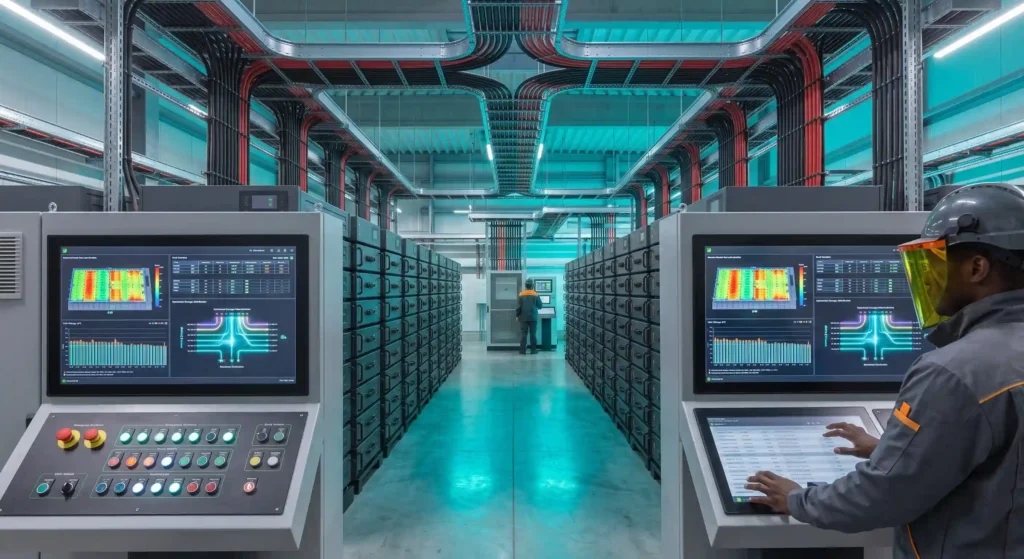
堆叠式储能电池系统能够出色地适应多种家庭能源应用场景,将传统被动用电的家庭转变为能够主动管理、优化和分配能源的智能能源系统。
通过与太阳能光伏系统、混合逆变器以及智能能源管理软件相结合,堆叠式储能电池不仅能够提供可靠的备用电力,还可以帮助家庭用户优化电力使用方式、降低用电成本,并提高能源独立性。
1. 全屋不间断应急备用电源
(Uninterrupted Emergency Whole-Home Backup)
当暴风雨、山火或其他自然灾害导致公共电网中断时,家庭储能电池可以立即成为住宅的主要电力来源。
出于电网安全考虑,传统并网太阳能光伏系统在发生停电时通常会自动停止运行,以防止电力反向输送至公共电网。
而堆叠式储能电池与混合逆变器(Hybrid Inverter)相结合,可以在电网断电后迅速建立独立的家庭微电网(Microgrid),部分高性能系统能够在毫秒级时间内完成备用电源切换。
这种快速切换能力使家庭在突发停电情况下仍能够维持重要电器和设备的正常运行。
例如,一套持续输出功率达到10 kW的高端堆叠式储能系统,在合理配置和负载管理的前提下,可以同时为多种大功率家用设备提供电力,包括:
-
中央空调系统: 在停电期间维持室内舒适温度。
-
家庭水井水泵: 确保住宅能够持续获得生活用水。
-
电烤箱: 满足家庭基本烹饪需求。
-
电动汽车充电设备: 在系统功率和剩余电量允许的情况下,为电动汽车提供充电支持。
需要注意的是,实际能够同时运行的设备数量取决于逆变器额定功率、电池放电能力以及各设备的启动功率和持续用电需求。
如果公共电网停电持续数天,配备兼容太阳能光伏系统的堆叠式储能电池还可以在白天利用太阳能电池板重新充电。
通过白天储存太阳能、夜间释放电能的运行模式,家庭可以在长时间停电期间持续获得备用电力供应。
在太阳能发电量充足、储能容量合理且家庭用电负载得到有效管理的情况下,这种系统能够显著延长家庭的能源自主运行时间,甚至在特定条件下实现长期离网供电。
因此,堆叠式储能系统不仅是一种能源存储设备,更是提升家庭应急供电能力和能源安全性的重要解决方案。
2. 分时电价(TOU)优化与峰谷电价套利
(Time-of-Use Tariff Arbitrage)
目前,许多电力供应商采用**分时电价(Time-of-Use,TOU)**计费模式,根据一天中不同时间段的电力需求调整电价。
通常,当大量家庭用户在傍晚返回家中并集中使用电器时,电力需求会明显上升,因此电价相对较高。
例如,下午4点至晚上9点可能属于高峰电价时段(Peak Hours)。
相比之下,在夜间或者部分中午时段,由于整体电力需求较低或太阳能发电量较高,电价可能相对便宜,属于低谷电价时段(Off-Peak Hours)。
堆叠式储能电池可以利用智能能源管理软件,自动识别不同时间段的电价,并优化充放电策略,实现峰谷电价套利。
其基本工作原理如下:
低谷电价时段充电
当夜间电网电价较低时,储能系统自动从公共电网获取电力,为电池充电。
如果家庭安装了太阳能光伏系统,也可以在白天利用多余的太阳能发电量为电池充电,从而进一步减少对公共电网的依赖。
高峰电价时段放电
当傍晚进入高峰电价时段后,储能系统自动释放之前储存的电能,为家庭电器提供电力。
这种方式可以显著减少家庭在高电价时段从公共电网购买的电量,从而降低整体电费支出。
例如,如果一套堆叠式储能系统每天在高峰电价时段释放10 kWh的储存电能,就能够减少相应时段的高价电网用电量。
随着时间推移,峰谷电价之间的差额能够为家庭带来可观的电费节省。
实际节省金额取决于当地峰谷电价差、电池充放电效率、充电电力来源以及相关电费政策。
对于峰谷电价差较大的地区,这种智能充放电模式能够有效提高储能系统的经济价值,并有助于缩短整体投资回报周期(Return on Investment,ROI)。
因此,堆叠式储能电池不仅能够储存电能,还能够帮助家庭用户更加智能地管理能源成本,实现长期、可持续的经济收益。
系统设计与兼容性:逆变器生态系统
(Design and Compatibility: The Inverter Ecosystem)
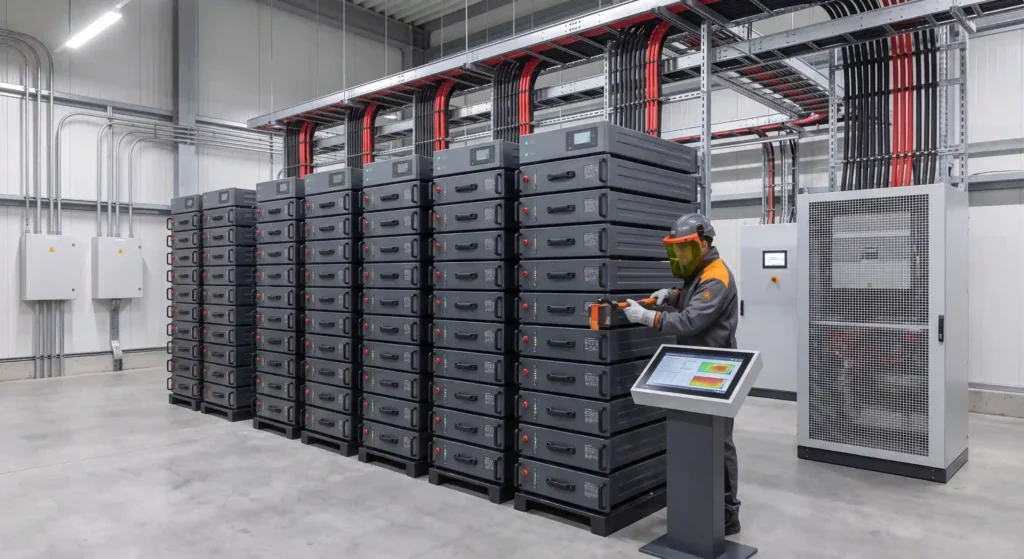
家庭储能系统的整体性能在很大程度上取决于逆变器的技术能力和兼容性。
逆变器(Inverter)是连接储能电池、太阳能光伏系统、家庭用电设备以及公共电网的核心设备。 它不仅负责直流电(DC)与交流电(AC)之间的转换,还承担着能源调度、充放电管理以及系统运行控制等重要功能。
堆叠式储能电池系统可以与市场上多种主流混合逆变器(Hybrid Inverter)配合使用。
根据太阳能光伏系统与储能电池之间的电力连接和转换方式,家庭储能系统通常可分为以下两种主要架构。
1. 交流耦合系统(AC-Coupled):适合现有光伏系统升级
交流耦合储能系统通常采用内置逆变器或独立配置的专用储能逆变器。
在这种架构中,储能电池可以通过专用逆变器接收来自公共电网的交流电,也可以将现有太阳能光伏系统输出的交流电重新转换为直流电,储存在电池模块中。
当家庭需要使用储存的电能时,储能逆变器再将电池中的直流电转换为交流电,为家庭用电设备供电。
交流耦合系统最大的优势在于安装灵活,特别适合已经安装太阳能光伏系统、希望后期增加储能功能的家庭。
由于无需对现有光伏系统进行大规模改造,用户通常可以在保留原有光伏逆变器的基础上,新增储能电池及配套设备。
这种方案能够有效降低系统改造的复杂程度,为现有太阳能用户提供更加便捷的储能升级选择。
2. 直流耦合系统(DC-Coupled):适合新建光伏储能一体化系统
直流耦合系统将太阳能光伏组件、混合逆变器和堆叠式储能电池整合为一个统一的能源管理系统。
太阳能电池板产生的电力本身就是直流电,因此可以通过兼容的混合逆变器及其内部充电管理电路,将太阳能电力直接用于电池充电,而不需要先转换成交流电再转换回直流电。
当家庭需要使用电力时,混合逆变器再根据实际负载需求,将直流电转换为交流电,为家庭电器供电。
这种设计减少了不必要的电力转换环节,从而有效降低能量转换损耗,提高系统整体运行效率。
对于计划同时安装太阳能光伏系统和家庭储能设备的用户,直流耦合通常是一种高效且集成度较高的解决方案。
其主要优势包括提高太阳能利用效率、减少重复的电力转换,以及实现太阳能发电、储能充放电和家庭用电之间的协调管理。
3. 高压堆叠式电池与逆变器的兼容性
现代堆叠式储能系统,尤其是高压储能电池模块(High Voltage Battery Modules),对于逆变器的兼容性有着更加严格的要求。
高压储能电池必须与电压范围、通信协议、电池管理系统(BMS)及充放电参数相匹配的高压混合逆变器配合使用。
目前,市场上具有相关储能逆变器产品的制造商包括:
-
SMA: 提供面向住宅及商业储能应用的逆变器和能源管理解决方案。
-
Growatt: 提供多种混合逆变器及光伏储能系统解决方案。
-
Deye: 提供适用于不同应用场景的混合逆变器和储能逆变器。
-
其他专业逆变器合作伙伴: 根据储能电池的技术参数和通信协议,提供适配的高性能逆变器产品。
需要注意的是,不同品牌及型号的逆变器并非都能够直接兼容所有堆叠式储能电池。实际安装前,应核实制造商公布的兼容性清单和技术认证要求。
通过合理匹配电池系统与逆变器,可以优化储能系统的充放电效率、运行稳定性和能源利用率。
部分高性能系统在特定测试条件下,其往返效率(Round-Trip Efficiency)可以超过95%,但实际效率会受到逆变器架构、电池性能、运行温度及测试边界等因素的影响。
因此,选择兼容性良好的逆变器,不仅关系到系统的转换效率,也直接影响家庭储能系统的长期稳定性、安全性和整体使用体验。
总结:通过垂直堆叠式储能迈向能源独立
(Conclusion: The Vertical Path to Independence)
堆叠式储能电池代表着住宅能源存储技术向高安全性、高灵活性和智能化发展的重要方向。
通过将磷酸铁锂(LiFePO4)电池技术的安全性与模块化储能系统的灵活扩展能力相结合,堆叠式储能系统为家庭用户提供了一条更加可靠、可持续的能源独立之路。
与传统固定容量的储能设备不同,模块化堆叠式电池不再要求用户一次性配置全部储能容量。
家庭可以根据当前的用电需求和投资预算,合理选择初始储能容量,并在未来随着用电需求增长逐步增加电池模块。
这种灵活的扩容模式使家庭储能系统能够持续适应生活方式、能源需求以及用电环境的变化。
与此同时,通过与太阳能光伏系统、智能混合逆变器和能源管理平台相结合,堆叠式储能电池能够有效提升家庭能源自主性,减少对公共电网的依赖,并帮助用户降低电价波动带来的影响。
随着全球能源结构不断转型、电动汽车逐渐普及以及家庭电气化程度持续提高,住宅储能系统的重要性将进一步提升。
在选择家庭储能解决方案时,真正值得关注的不仅是能够储存多少电能,更重要的是如何更加智能、高效且灵活地管理这些能源。
堆叠式储能电池通过垂直模块化设计,为家庭提供了兼顾空间利用率、容量扩展性、运行安全性和长期经济价值的能源存储解决方案。
选择堆叠式储能系统,不仅是为了满足当下的家庭用电需求,更是为未来不断发展的新能源时代做好充分准备。